


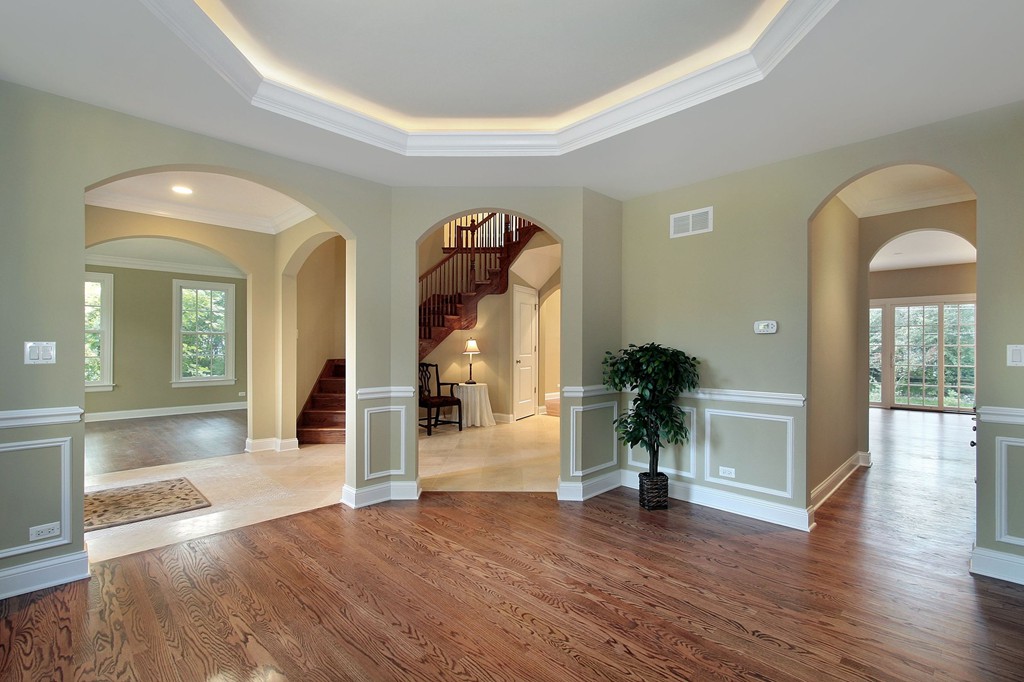
There is nothing quite like the natural elegance and rich character of wood flooring. It brings a piece of the great outdoors inside, creating a warm, cozy cabin feel that perfectly complements mountain living. However, when shopping for wood floors, homeowners are immediately faced with a crucial decision: should they choose solid hardwood or engineered wood? While both options offer gorgeous aesthetics, they behave very differently when exposed to temperature swings, moisture, and high-altitude dry spells. Deciding which material is best for your property requires evaluating your lifestyle, budget, and the specific environmental conditions of your home.
The Timeless Prestige of Solid Hardwood
Solid hardwood is precisely what it sounds like—single, solid planks of wood cut directly from a tree. It has been the gold standard of residential flooring for centuries due to its authenticity, depth of grain, and incredible longevity. One of the biggest advantages of solid hardwood is that it can be sanded down and refinished multiple times over its lifespan. This means that even after decades of heavy foot traffic, pet claws, and minor scratches, your floors can be completely restored to their original luster.
However, solid wood is highly sensitive to its environment. Because it is a completely natural, porous material, it reacts directly to changes in humidity. In dry winter months, solid planks will shrink, occasionally creating small gaps between the boards. During humid summers, they absorb moisture and expand, which can lead to cupping if not installed with proper expansion gaps. For this reason, solid hardwood is best suited for temperature-controlled main levels and is generally not recommended for basements or rooms prone to high moisture.
The Structural Resilience of Engineered Wood
Engineered wood flooring was specifically developed to combat the stability issues associated with solid hardwood. It is constructed by bonding a genuine hardwood veneer (the top layer you see and step on) over multiple cross-direction layers of high-density fiberboard or premium plywood. This cross-ply construction creates a highly stable core that resists warping, cupping, and expanding, even when exposed to severe humidity fluctuations or subfloor moisture.
Because of this superior structural stability, engineered wood is incredibly versatile. It can be safely installed in basements, over concrete slabs, and even over radiant heating systems—areas where solid hardwood would quickly fail. While most engineered floors cannot be refinished as many times as solid wood, high-quality options with a thick wear layer can still be sanded and refinished once or twice, offering a beautiful balance of longevity and performance.
Crafting a Foundation Built to Last
Choosing between solid and engineered wood comes down to where the flooring will be installed and how much environmental control you maintain in your home. Both options bring incredible beauty and value to a property when installed by seasoned professionals. Our team has spent years guiding local property owners toward the absolute best material matches for their unique architectural needs. You can read more about our background, values, and community projects on our About Us page.
If you are ready to compare solid and engineered wood samples side-by-side, we would love to assist you. Visit one of our convenient showroom locations to consult with our flooring design team and receive a professional assessment for your home.


